
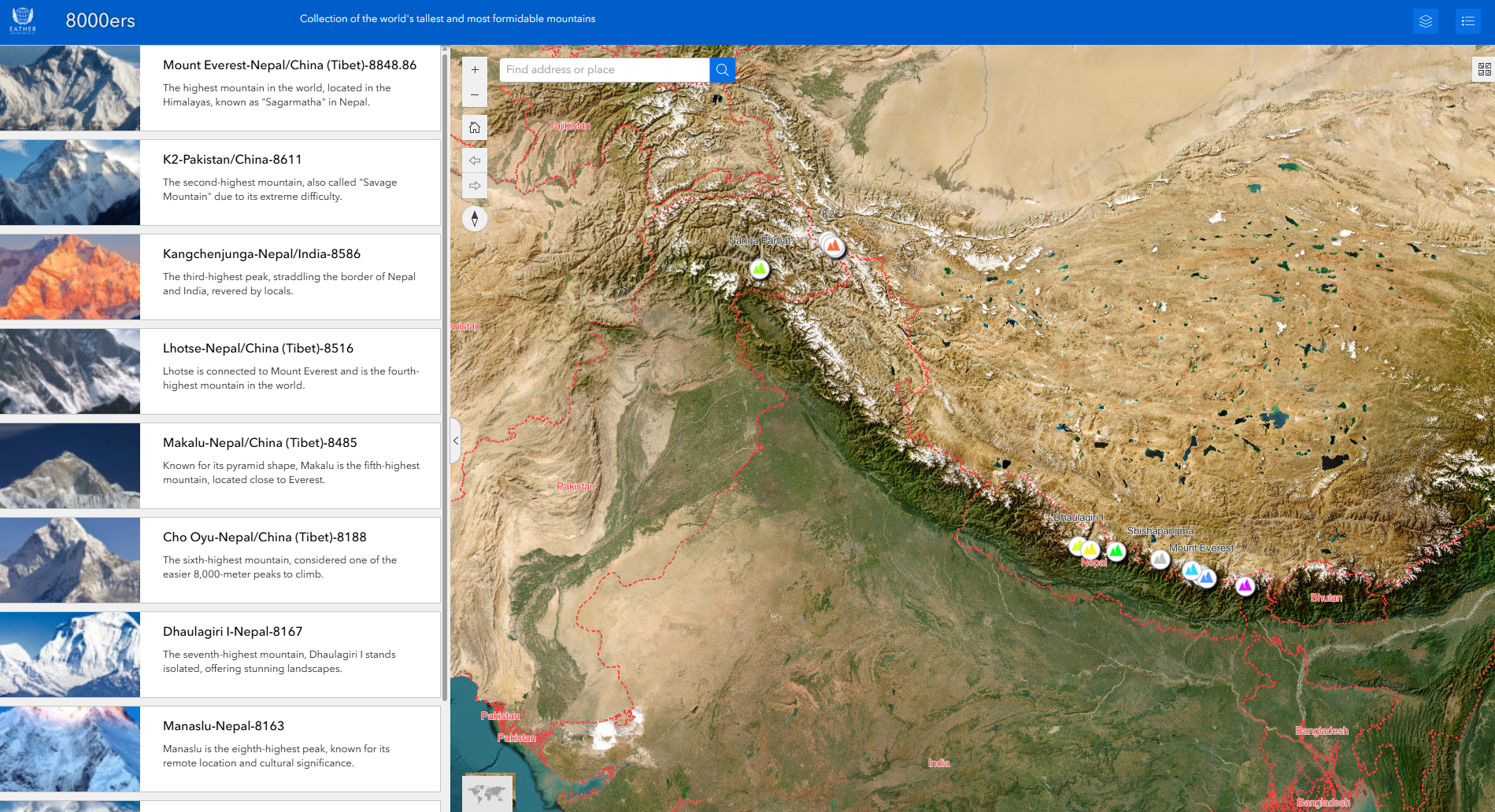
The 8000ers—14 peaks soaring above 8,000 meters—are the highest mountains on Earth. Found only in the Himalayas and Karakoram ranges, these giants are not just mountaineering trophies—they’re vital to climate science, geography, and global adventure culture.
 Why the 8000ers Matter
- Extreme Altitude: All 14 peaks lie in the “death zone” (above 8,000m), where oxygen is too thin for sustained human survival.
- Deadly Beauty: Annapurna I has a 27% fatality rate, the highest among the 8000ers . K2 and Nanga Parbat follow closely with over 20%.
- Elite Achievements:
- In 2023, Kristin Harila and Tenjen Lama Sherpa set the record for the fastest ascent of all 14 peaks—just 92 days using supplemental oxygen.
- In 2024, Nimsdai Purja became the fastest to climb all 8000ers without supplemental oxygen, completing the feat in 2.5 years.
- In 2024–2025, 19 climbers corrected previous false summits, embracing the standard that only the highest point counts
- Nima Rinji Sherpa, at just 18 years old, became the youngest person ever to summit all 14 peaks
- Climate Indicators: These peaks host glaciers that are rapidly retreating, offering critical data on climate change.
Explore this ArcGIS Experience Builder app to see how maps, data, and design come together to tell the story of the 8000ers.